
Kabak is the second cove to be discovered by travelers in the Faralya district after Butterfly Valley in the late 2000s and early 2010s. It is at the end of the Faralya road. You need to walk down about half an hour to get to the beach area, which offers huts, bungalow, and tent accommodations. The trees offer shade, but it can get hot in July and August. Nature is unspoiled; the valley that leads to the sea offers breathtaking views of the blue sea below, but the two hills to the north and east of the valley are also beautiful — or better yet, have character (see photo below).
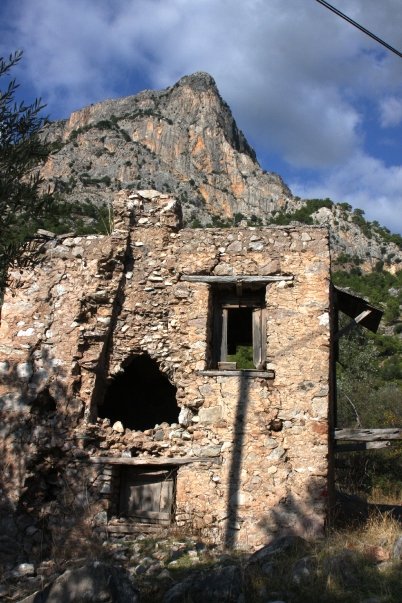
Kabak is the place to get away from it all, like its neighboring Butterfly Valley. The area is carefully preserved as it is a late discovery, and eco-tourism consciousness is starting to grow in Turkey.

Unless you are trekking along the coast, Kabak Cove means chilling out, enjoying time casually, reading a book, enjoying the beach, and having conversations with like-minded travelers. And if you want to party, you can still go to Ölüdeniz and enjoy the crowds — it is about 30 minutes away in the direction of Fethiye.
Public transportation to the city center of Fethiye from Kabak is not frequent, so inquire about your return trip schedule before leaving Fethiye.
You can see videos of the region in Fethiye Video Clips.
For lodging in the Fethiye region, please see Fethiye Hotels.

Accommodation in Kabak is rustic and eco-focused:
Most places include breakfast and dinner. Electricity may be limited; bring a power bank. There are no luxury hotels in Kabak.
From Fethiye, take the dolmus toward Faralya. Ask the driver to let you off at the Kabak turnoff. The dolmus runs a few times daily — check the return schedule before descending. A taxi from Fethiye costs about 200-300 TL (approx $10-15). Most visitors come by rental car. Park at the top of the road (small parking fee). The walk down to the beach takes 20-30 minutes on a steep, uneven path. You can arrange for your luggage to be carried down by the campsite staff for a small fee.