Overview of Göbeklitepe

Since 1995, Twarp has guided travelers to Turkey's ancient treasures. Göbeklitepe has had some coverage in the media in recent years. Below you will find the beginning pages of my book Who Built Göbeklitepe, which I wrote in 2019.
New research published in the 2020s has proven my book regarding the people who built Göbeklitepe. I have since written a new book, a short reference book on the last 50,000 years of human history which brought us behavioral modernity, called Echoes of the Ice: How Migrations Made Civilizations. Excerpts of the chapter where I explain the latest archaeogenetics research and how it revealed the identity of the people who built Göbeklitepe can be found here: https://ourhumanpast.org/iran-turkey-gobeklitepe.html
The site is unique in the world on its own on multiple grounds but it is also a part of the region where a crucial socio-cultural-econopolitical revolution took place deeply affecting the history of humanity. As such it requires more attention from a broader range of academics from different disciplines. Moreover, even interest among archaeologists is not anywhere near enough for Göbeklitepe considering the above outlined context indicating transformation of societies from a hunter gatherer lifestyle which had been the standart for about 290,000 years of modern human existence, to a sedentary Neolithic (agriculture and animal domestication) lifestyle some 11,000 years ago.
It is impossible to overstate the importance of agriculture and animal domestication in the course of human civilization and Göbeklitepe is at the center of this revolution both in time and space.
As I have indicated previously Göbeklitepe is one of several other important contemporary ancient sites in the region (Karahantepe, Kortik tepe, Nevali Cori and many others), but certainly unique in some aspects.
| Location | Southeast Turkey, near Şanlıurfa (Urfa) |
| Age | 12,000 years old (9400 BC to 8000 BC) |
| Discovered By | Klaus Schmidt (1994) |
| Key Feature | T-shaped stone pillars up to 5 meters tall |
| Status | World's oldest known megalithic site |
My Books on Göbeklitepe & Human History
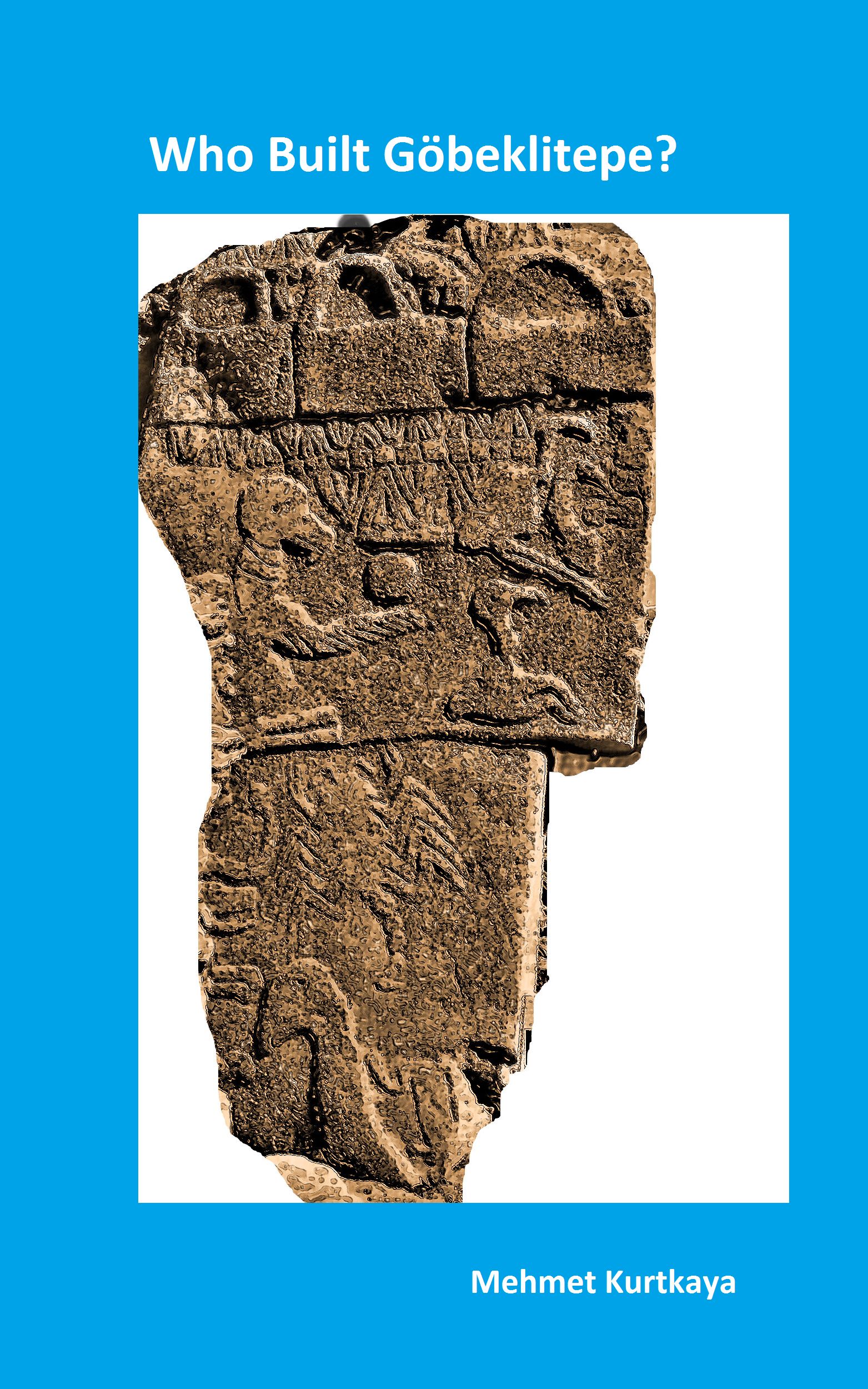
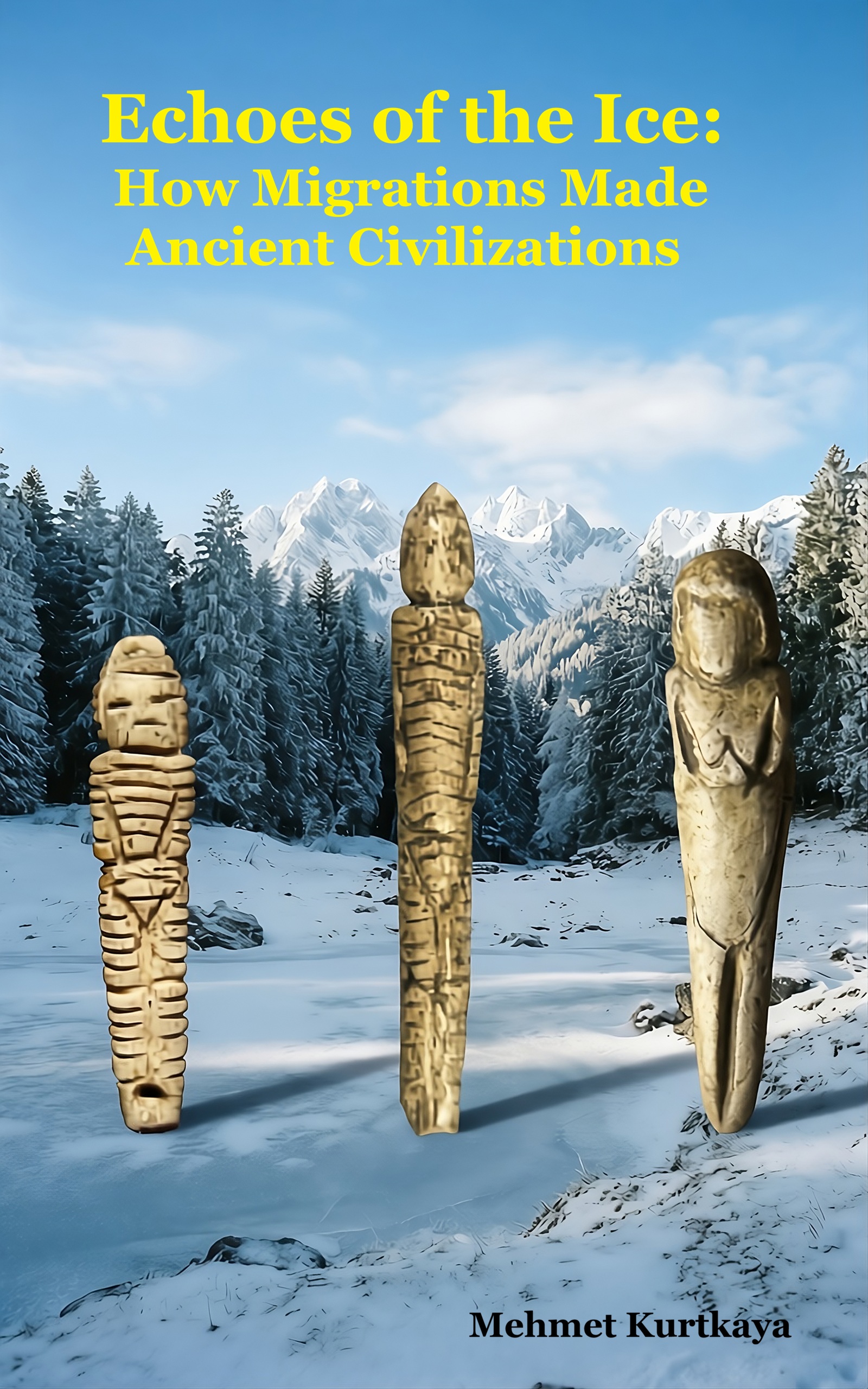
The archaeological treasure of Göbeklitepe

While at first we would think of gold and silver objects in an ancient site as the meaning of a treasure, here we have stone carvings, reliefs, the arrangement of stone blocks, stone sculptures, hunting tools and others to look into the spiritual and cultural life in Göbeklitepe. There are also animal bones, food/drink remains, some human bones including cranial bones with carvings on them indicating skull cult, other stone objects like a stone vessel, stone masks, statues of human heads and animals, a totem pole, and social/mythical stories carved into stones.
All of these items help us look into both the material and the spiritual life of these people at the time of transition from the Stone Age to the Neolithic Age marked by plant and animal domestications.
Let's talk about the iconic 12000 year old T-shaped stone pillars
Let's talk about the iconic 12000 year old T-shaped stone pillars associated with Göbeklitepe. It is not the only site that encompasses such T-shaped pillars, there are still unexcavated sites known to have T-shaped pillars in Karahantepe, Harbetsuvan and a few others in Southeast Turkey and Northern Syria.
The first T-shaped pillar was found in nearby Nevali Cori ancient settlement, slightly younger than Göbeklitepe and excavated in the 1980s by German archaeologists Hauptmann and Klaus Schmidt the archaeologist who discovered Göbeklitepe in 1994 for what it is. Yet, Göbeklitepe is the biggest, most complex of such sites and the only one that was excavated for two decades by German archaeologist Klaus Schmidt until his premature death. The excavations are being continued by his colleagues at the German Archaeology Institute who had worked with him in Göbeklitepe for many years. Klaus Schmidt was also one of the people who made Göbeklitepe world famous.
Going back to iconic T-shaped pillars, we should note that they were initially arranged in big circles later on smaller circles and rectangular shapes with the biggest T-Shaped pillar sometimes reaching heights of 5 meters located right in the center of the circles.
Megaliths are found all around the world and Göbeklitepe is the world's oldest known megalithic site.
Why the T-shape?
The iconic shape represents the human body according to Göbeklitepe archaeologists. Animal reliefs and carvings on the T shaped pillars have mythical, symbolic meanings, and there are many different animals and animal combinations on different pillars.
The explanation by Göbeklitepe archaeologists is convincing because they also use different scupltures found in other exvacations in the region from around the same date as Gobeklitepe such as the Urfa man and Kilisik stone to come up with an answer. They also show arms, hands, belt carved on the stone T shaped pillars in Gobeklitepe. Hence, the top stone slab represents a head with no face.
I had previously thought and written that the T shape represented the sun. I was wrong but probably not totally. I think it became the representation of the sun as seen in sun circles at a later date.
While the main vertical pillar seems certain to represent the body of a human, there is still room for speculation about the top slab that is said to represent a human head with no face. They could have carved a head like they did with animal figures but chose not to. Why?
The meaning of reliefs and carvings on T-pillars
This is probably one of the most important aspects of Göbeklitepe if not the most important. Pillars have animal figures on them with at least one having a man (pillar 43).
Some of the pillars were analyzed by Göbeklitepe dainst.blog which also include interesting comments by some readers:
- A tale of snakes and birds: Göbekli Tepe, Pillar 56.
- Of animals and a headless man. Göbekli Tepe, Pillar 43
Pillar 43 is the most interesting of all T-shaped pillars recovered from the site so far. And the commentary and some of the comments in the page are quite important.
In his Prague Ted Talk, Klaus Schmidt had shortly mentioned the significance of animal reliefs and how the pre-hieroglyph Egypt had similar animal pictures as a form of pre-writing. He also mentioned that there was a gap of many thousands of years between Göbeklitepe and Egyptian civilizations which makes it quite difficult to connect them but that archaeologists were trying to fill the gap.
Let us also note that there are some similarities among some Göbeklitepe reliefs and the 3500 years later Sumerian and even later Assyrian seals as remarked by many researchers, and a web search will yield results for varied comparisons and some seem valid. And even the suggestion of a mythological connection to Sumerian belief that farming and animal domestication was given by gods in a Sumerian mountain Ekur.
At least some of the animals depicted on the pillars could be totem animals representing different tribes getting together at this cultic center. This is known as a center attended by people from around the region and probably involved more than one tribe/people.
Cultic center, feasting and beermaking
A good online read would be "The role of cult and feasting in the emergence of Neolithic communities.New evidence from Gobekli Tepe, ¨south-eastern Turkey" by Oliver Dietrich, Manfred Heun, Jens Notroff, Klaus Schmidt, Martin Zarnkow.
It seems like they made beer in Göbeklitepe. Jens Notroff and others raise the qıestion whether people started agriculture for beermaking.
There is enough evidence that Göbeklitepe was a feasting place and people comsumed wheat in addition to deer and other animal meat. It seems like most if not all was wild wheat brought to the site for festivities and rituals. Grinding of the wheat was done on site. Göbeklitepe's active period from 9400 BC to 7400 BC coincides with farming and the first wheats were domesticated in the area, nearby slightly younger Nevali Cori is one of the candidates for being one of the first sites of wheat domestication in the world.
Çatalhöyük (7400-6000 BC) a major Neolithic farming city, one of the biggest of its time in the world is only a few hundred kilometers west of Göbeklitepe in Central Anatolia. This is the area, Konya plains where first farmers of Europe migrated from.
There is another site, much less known than Çatalhöyük but a full 1000 years before Çatalhöyük and almost adjacent to it, 9 kilometers or 1-2 hours walking distance from Çatalhöyük: Boncuklu.
The beginning of this site, 8400 BC, was contemporary with the mid-late Göbeklitepe period.
Patriarchy in Göbeklitepe
Academics thought religions started with the surplus food agriculture brought but Göbeklitepe reversed this view, suggested that people started agriculture in order to sustain their sacred site. At least we now know late Paleolithic hunter-gatherers had a complex spirtual-cuultural world, tens of thousands of years before the start of agriculture.
Patriarchy also predates agriculture. We can clearly see a male centric ritual place where people gather, rituals and festivities take place in Göbeklitepe.The carvings only display penises when genitals are shown for humans and animals. That's unlike the much earlier Eurasian art of 30000-10000 years agp where Paleolithic "Venus" display female form and vulva.
Although at a much later date, some 4000 years later, genetic studies done in megalithic structures of European Atlantic coast show patrilocality in the graves beneath the megaliths.
Megalithic tombs in western and northern Neolithic Europe were linked to a kindred society
Federico Sanchez-Quinto Ape,l 2019
Quote from the abstract: "These observations suggest that the investigated funerary monuments were associated with patrilineal kindred groups."
Although so far no grave has been found in Göbeklitepe, Klaus Schmidt had indicated that this was a possibility which later excavations could show.
The European farmers were responsible for the megaliths but we know that all the farmers of Europe migrated from Turkey. Especially Çatalhöyük in Central Anatolia/Turkey served as a hub. And to the west, there were migrations from the area where Troy was millenia later built, to Europe.
See the map of the Spread of farming from around the Taurus mountains towards Europe
The early beginnings of a class society?
While there was no class society in Gobeklitepe or in other ancient sites in the area, it is possible to note early beginnings of class society.
First, the number of people needed to construct the site would be in the hundreds at least.
Second, the existence of division of labor is more than probable, as there were different tasks needed to construct the site.
Third, management of the labor would be required.
What we see in site is the existence of hierarchy in T shaped pillars, a few of them much bigger than others.
All of this, including patriarchy, hints at the early beginnings of a class society.
We cannot talk about a slave society, a class society as in Sumerian civilization and others that followed it, including the most elaborate form called capitalism, but we can find clues on how slave societies have been formed in time.
Fertile Crescent

If you are interested in ancient history, you may have heard the term Fertile Crescent before. It is the area that is comprised of the Zagros mountains in Northeast Iran forming the border with Iraq that runs all the way south to the Persian Gulf in the East, Eastern Taurus Mountains at the top center which is the Turkish name given to the extension of the same mountain ranges as Zagros and a Western region that runs along the Mediterranean called Levant with the famous Neolithic site Jericho in the south.
This is the definition of the term Fertile Crescent. In the last few decades archaeological exvacations showed that the Northern portion of the crescent which is the Taurus mountain ranges in Southeastern Turkey is the area that is historically the most important, rather than the Southern Levant section that was popular earlier.
There is a reason for that.As more archaeological excavations were done, and even more genetic research studies completed especially on animals and plants, it became obvious that the area just in and around the Eastern Taurus mountains was truly a remarkable place that can be called the center of Neolithic revolution of humanity.
Gobeklitepe can be called the proverbial icing on the cake. The area is known for not only the first animal domestications but also wheat domestication.
For example pigs were first domesticated in Çayönü and were brought to Europe with migrating farmers from Turkey and they were bred with wild boar in Europe forming the modern European pigs. Cattle was first domesticated in the Taurus mountains and migrated to Europe with farmers living in Turkey.
Barley, lentils, pea were cultivated in Cafer Hoyuk another site in the region contemporary with Gobeklitepe.
The Neolitic revolution took place in the Northern section of the Fertile crescent.
Frequently Asked Questions
What is Göbeklitepe and why is it important?
Göbeklitepe is the world's oldest known megalithic site, located in Southeast Turkey. It features 12,000-year-old T-shaped stone pillars arranged in circles. The site shows that complex spiritual and cultural life existed before the advent of agriculture, reversing earlier academic theories.
What do the T-shaped pillars at Göbeklitepe represent?
According to Göbeklitepe archaeologists, the iconic T-shape represents the human body. The top slab represents a head with no face, while the vertical pillar represents the body. Some pillars also have arms, hands, and belts carved into the stone.
Did they make beer at Göbeklitepe?
It seems like they made beer in Göbeklitepe. Jens Notroff and others raise the question whether people started agriculture for beermaking. There is enough evidence that Göbeklitepe was a feasting place where people consumed wheat, deer, and other animal meat.
What is the connection between Göbeklitepe and the Fertile Crescent?
Göbeklitepe is located in the Northern section of the Fertile Crescent, specifically the Taurus mountain ranges in Southeastern Turkey. This area is historically the most important for the Neolithic revolution, including first animal domestications and wheat domestication.
Who discovered Göbeklitepe?
German archaeologist Klaus Schmidt discovered Göbeklitepe in 1994 for what it is. He excavated the site for two decades until his premature death. The excavations are being continued by his colleagues at the German Archaeology Institute.
Can I visit Göbeklitepe?
Yes, Göbeklitepe is open to visitors. It is located near the city of Şanlıurfa in Southeast Turkey. A visitor center and protective shelter have been built over the main excavation areas to preserve the site while allowing public access.