Ankara Travel Guide
Capital of Turkey — Heart of Anatolia
Ankara is a big city of nearly 5 million inhabitants, the capital of the Turkish Republic, situated in the heart of Anatolia. Ankara was in fact a Hittite city called "Ankuwash". It was invaded by the Phrygians, then conquered by Alexander the Great, and finally became a part of the Roman Empire as Ankyra around 25 BC. The Seljuks and the Ottomans named this old city as Angora.
It is now a modern city with some historic ruins, mainly of Hittite and Phrygian origin. It is also the home of the Angora Goat, Angora Rabbit, and Angora Cat. The city was one of the main stops on the Silk Road and it is also an important connection point on the roads coming from the Black Sea. Today, it is a city of all governmental bodies and military headquarters.
Ankara is not a tourist city. It is the capital of Turkey.
Major Sightseeing Places
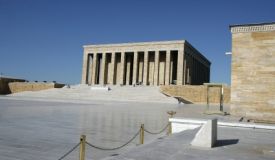
🏛️ Anıtkabir (Mausoleum of Atatürk)
Standing on the hill, this limestone structure is a tribute to the founder of modern Turkey. The mausoleum complex includes the tomb chamber, a museum with Atatürk's personal belongings, and the peaceful Lion Road. Allow 1-2 hours. Free entry.
🏺 Museum of Anatolian Civilizations
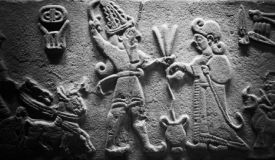
The most important archaeological museum not only in the region but in all of Turkey. This small museum houses artifacts from all the cultures and peoples who have lived in Anatolia, including Hittite, Phrygian, Urartian, and Roman collections. The Hittite reliefs and the "Sun Disk" are highlights. Allow 2-3 hours.
🏛️ Temple of Augustus
A Roman site that can be visited. The temple contains the Res Gestae Divi Augusti (Deeds of the Divine Augustus) inscription in both Latin and Greek. Located near the Hacı Bayram Mosque.
🏰 Ankara Castle (Kale)
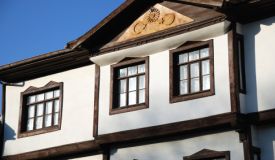
At night, you can visit the Kale (castle) area for entertainment, dining, and panoramic views of the city. The surrounding neighborhood has restored Ottoman-era houses, now home to restaurants and cafes.
Day Trips from Ankara
If you have any chance of getting out of town to visit some places around Ankara, a tour to Hattuşaş ruins, where Anatolian civilization has its roots, is a great idea.
- Hattuşaş (Boğazköy): The capital of the Hittite Empire, a UNESCO World Heritage site. See the Lion Gate, King's Gate, and the Yazılıkaya rock sanctuary. About 3 hours east of Ankara.
- Beypazarı: An authentic Central Anatolian town to see how important the concept of "bazaar" is for Anatolians — not only for trade but also for sociological and cultural reasons. Known for its Ottoman-era houses, silver work, and carrot dishes.
Practical Information
Getting there: Ankara is served by Esenboğa Airport (ESB), about 30 km north of the city center. Frequent buses connect the airport to the city. High-speed trains (YHT) connect Ankara to Istanbul (4.5 hours), Konya, and Eskişehir.
Getting around: Ankara has a modern metro and bus system. The main tourist sites are spread out; use the metro or taxis. Ankaray (light rail) and metro lines cover most of the city.
Best time to visit: Spring (April-June) and autumn (September-October) are ideal. Summers are hot and dry; winters are cold with snow possible.
Nearby Attractions
- Ulus District: The old city center with Roman ruins, the Museum of Anatolian Civilizations, and traditional shops.
- Kızılay: The modern city center with shops, restaurants, and cafes.
- Çankaya: The upscale district where embassies and Atatürk's former residence are located.
- Gordion (about 1 hour west): The ancient capital of Phrygia, where King Midas is believed to be buried.