
Hittites were among the early settlers in the Anatolian peninsula (Turkey). Hittite language is the oldest Indo-European language with written records. Hittites had migrated from the Caucasus and formed an elite over the indigenous Hatti people living in Anatolia.
They worshipped a thousand gods.
They built palaces and temples.
They drank wine and the blood of bulls.
The fledgling Hittite empire became one of the superpowers of the Ancient World, along with Egypt and Babylonia.
The wars they waged against Egypt in 1200 B.C. ended with the first written peace agreement between states in history.
The treaty was signed with King Ramses of Egypt and King Moursil of Hittite.
The empire came to an end with a torrential invasion of European origin that destroyed their towns, as well as Troy and other cities in Anatolia.
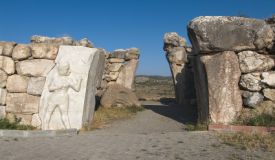
The Hittite capital city. Features massive city walls, monumental gates (Lion Gate, King's Gate, Sphinx Gate), the Great Temple, and the royal citadel (Büyükkale). Allow 3-4 hours. The site is spread over a large area — a car is helpful, or be prepared for a lot of walking.
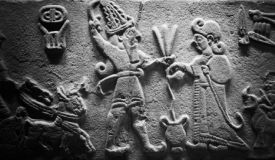
A rock sanctuary located just outside Hattusas. Two natural rock chambers are covered with reliefs of Hittite gods and goddesses. The main chamber shows a procession of gods meeting goddesses. The reliefs are among the finest examples of Hittite art. Allow 30-45 minutes.
An important Hittite settlement located about 20 km north of Boğazkale. Famous for the Sphinx Gate, which is decorated with sphinxes and a relief of a king and queen worshipping. The site also contains royal tombs with remarkable bronze and gold objects. Allow 1 hour.
No journey into the Hittite world is complete without visiting this museum. It holds the finest archaeological collection of every civilization that left a signature on Anatolia, including the Hittite sun disks, bronze standards, and reliefs from Alacahöyük. If you would like to see artwork that is 8,000 years old, this place is for you. Allow 2-3 hours.
There are impressive writings and carvings on the rocks, as well as ruins thousands of years old.
The city walls stretch for over 6 km.
There are five gates: Lion Gate, King's Gate, Sphinx Gate, Upper Gate, and Lower Gate.
The Great Temple was dedicated to the storm god and sun goddess.
Büyükkale (the citadel) was the royal palace and administrative center.
The site is large — bring water and wear comfortable walking shoes.
Yazılıkaya is a sanctuary very close to Boğazkale.
It is an open-air rock temple.
The main chamber features 64 reliefs of gods and goddesses.
The gods are shown in procession, marching toward the central scene of the chief god and goddess.
The rock chambers were used for religious ceremonies and royal celebrations.
The reliefs are well-preserved and easy to see.
Alacahöyük is 20 km from Boğazkale and holds the Sphinx Gate.
The gate is decorated with two sphinxes.
Above the sphinxes is a relief of a king and queen worshipping a bull (representing the storm god).
The site was first settled in the Chalcolithic period (5000 B.C.).
The Hittite period tombs yielded gold, silver, bronze, and pottery objects.
These objects are now displayed in the Museum of Anatolian Civilizations in Ankara.
Entrance Fee: Separate tickets for Hattusas (approx 100-150 TL), Yazılıkaya (included with Hattusas ticket in some seasons), and Alacahöyük (approx 50-75 TL). Museum Pass Turkey is accepted at these sites.
Opening Hours: Hattusas and Yazılıkaya are open daily 8:00 AM to 7:00 PM (summer) and 8:00 AM to 5:00 PM (winter). Alacahöyük has similar hours. The Museum of Anatolian Civilizations in Ankara is open 9:00 AM to 6:00 PM (winter) and 9:00 AM to 7:00 PM (summer).
Best Time to Visit: Spring (April-June) and autumn (September-October) offer mild weather. Summer (July-August) can be very hot; start early. Winter (November-March) can be cold and snowy; some roads may be difficult.
How to Get There: Hattusas is about a 3-hour drive from Ankara (200 km). The roads are good. Public transport is limited — a guided tour or rental car is recommended. The nearest town is Boğazkale, which has basic accommodation and restaurants.
What to Bring: Water, sunscreen, hat, comfortable walking shoes (the site involves walking on uneven ground), and cash for entrance fees (cards may not be accepted at all ticket booths).
There are small hotels and guesthouses in Boğazkale village.
More options are available in Sungurlu (30 minutes west).
The widest selection of hotels is in Ankara (3 hours west).
For lodging in the region, please see Ankara Hotels.
You may also select and reserve hotels with special rates using our hotels page.
Please see our tour page for all tours in this region and around Turkey.