Sultanahmet Travel Guide
The Historic Heart of Istanbul
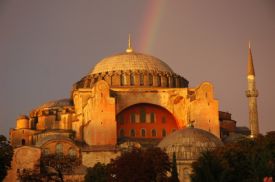
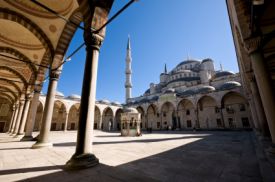

Sultanahmet is famous for its meatballs. That and the magnificent Hagia Sophia church, Topkapi Palace commanding the Bosphorus, and the amazingly beautiful Blue Mosque. And the Hippodrome, Basilica Cistern, Archeology Museum, Great Palace Mosaic Museum, and the carpet salesmen though their numbers are decreasing. It is extremely multinational, beautiful with its gardens and open spaces, easy with its cafes, relaxing under the shade of the trees decorating its side streets. And then busy again with bus loads of tourists. Sultanahmet is both part of Istanbul and the whole world.
In the 1960s not many tourists came. And those who visited the city were the hippies mostly from Europe and the US. They stayed in cheap dirty hotel rooms, were fed free by caring restaurant owners and they smoked. That was like 1960's everywhere in the West, Sultanahmet was the place of the West at those times. Istanbul residents avoided Sultanahmet.
In 1963 James Bond (Sean Connery) came to Istanbul with the now classic "From Russia With Love". It was that same year after starting "nouveau roman" movement in France, Alain Robbe Grillet came to Istanbul to shoot his beautiful "L'Immortelle". What a wonderful experience to see Istanbul in old movies as so much has changed since then.
And there was a Sultanahmet prison where most famous socialist political prisoners and some of the greatest figures of not only Turkish literature but also world literature like Nazım Hikmet were held. Nowadays that prison is converted to a luxury international hotel.
Times have sure changed but Sultanahmet is as beautiful as always. You can stay here to immerse yourself in history or to avoid tourists you can stay elsewhere in Istanbul and visit during day time. It depends absolutely how tourist-intolerant you are, but Sultanahmet surely is one of the best places to stay in Istanbul.
Visitor Information (2026)
Getting there: T1 tram to Sultanahmet stop. Also easily accessible by bus from Taksim, Beşiktaş, Eminönü, and many other districts. Walking distance from Eminönü (15-20 minutes) and Sirkeci.
Best time to visit: Weekday mornings (08:30–10:30) before the crowds and tour groups arrive. The district is most atmospheric early in the morning or after sunset when the monuments are illuminated. Summer months are very crowded, April-May and September-October offer pleasant weather and fewer crowds.
Where to stay: Sultanahmet has hundreds of hotels ranging from budget hostels to luxury boutique hotels. For a quiet stay, choose hotels on side streets away from the main tram line. Prices are highest April–October, especially around the Blue Mosque and Hagia Sophia.
Famous meatballs (Sultanahmet Köftecisi): The legendary restaurant "Sultanahmet Köftecisi" has been serving grilled meatballs since 1920. Located on the street behind the tram line. A traditional meal includes köfte, roasted peppers and onions, salad, and piyaz (bean salad).
Major Attractions in Sultanahmet
Hagia Sophia (Ayasofya): Built in 537 AD by Emperor Justinian, this architectural wonder was the world's largest cathedral for 1,000 years. Now a mosque (reconverted in 2020). Famous for its massive dome, Byzantine mosaics, and imperial doors.
Blue Mosque (Sultanahmet Camii): Built 1609-1616 for Sultan Ahmet I. Named for the 20,000+ blue Iznik tiles decorating its interior. The only mosque in Turkey with six minarets. Free entry, modest dress required, closed during prayer times.
Topkapı Palace: Ottoman imperial residence from the 15th to 19th centuries. Features four courtyards, the Imperial Treasury (featuring the Topkapı Dagger and Spoonmaker's Diamond), sacred relics (including Moses' staff and Muhammad's cloak), and harem quarters.
Hippodrome of Constantinople: Ancient chariot racing arena from AD 203. Surviving monuments include the Obelisk of Theodosius (from Egypt, 1490 BC), Serpentine Column (from Delphi, 479 BC), Walled Obelisk (10th century), and German Fountain (1901).
Basilica Cistern (Yerebatan Sarnıcı): Largest Byzantine underground cistern in Istanbul, built in 532 AD. Features 336 marble columns, including two with Medusa head bases. Atmospheric lighting, walkways, and occasional art exhibitions.
Istanbul Archaeology Museums: Three museums in one: the Archaeological Museum, Ancient Orient Museum, and Tiled Kiosk Museum. Houses the Alexander Sarcophagus, Treaty of Kadesh (the world's first known peace treaty), and thousands of artifacts.
Suggested Itineraries
One-day Sultanahmet highlights tour: Start at Hagia Sophia (08:30, arrive early) → Blue Mosque (10:00) → Hippodrome (11:00) → Basilica Cistern (11:30) → lunch at Sultanahmet Köftecisi (12:30) → Topkapı Palace (13:30-16:30) → Archaeology Museums (16:45-18:00) → evening tea at a rooftop cafe overlooking Hagia Sophia.
Slow traveler (2-3 days): Day 1: Hagia Sophia + Blue Mosque + Hippodrome + Basilica Cistern. Day 2: Topkapı Palace + Archaeology Museums + Gülhane Park. Day 3: Turkish and Islamic Arts Museum + Grand Bazaar + Great Palace Mosaics Museum.